
CGST Gurugram busts a large-scale fake GST registration racket operating in North Delhi, involving fraudulent invoices and ITC availment.
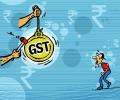
GST authorities have identified about 17,000 non-existent GSTINs and cancelled over 4,900 registrations in the ongoing pan-India drive against fake registration, a senior tax official said on Wednesday. Currently, there are 1.40 crore businesses registered under Goods and Services Tax, nearly double the number of businesses registered in indirect tax regime pre-GST rollout. Central Board of Indirect Taxes and Customs (CBIC) member Shashank Priya said in the drive against fake registration, till July 4, over 69,600 GST Identification Numbers (GSTINs) have been selected for physical verification by field tax officers.
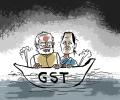
The Commercial Taxes Department has arrested Mohammed Tauqeer for his involvement in generating and routing fraudulent ITC across multiple states, unearthing a GST fraud worth Rs 410 crore.

Police in Kanpur have arrested a suspected mastermind behind a network of fake firms, forged documents, and suspected hawala transactions worth over Rs 3,200 crore.
The Directorate General of GST Intelligence (DGGI) has uncovered a fake input tax credit racket worth approximately 593 crore in Karnataka, leading to the arrest of the alleged mastermind.
The Uttar Pradesh STF has arrested a man in connection with a Goods and Services Tax (GST) fraud estimated at Rs 15,000 crore. The accused allegedly used fraudulently obtained GST registrations to create fake firms and generate bogus invoices.

The Centre and states are looking to further tighten the GST registration process and legal measures to deal with the rising cases of fake invoicing. A meeting of the law committee of the GST Council has been convened on Wednesday to discuss these issues, finance ministry sources said. The committee, comprising senior central and state tax officers, would also discuss the GST fake invoice frauds, further tightening of the GST registration process and work out other legal measures including necessary law amendment required in the GST Act to curb the menace of fake invoicing, they added. Also the provisions related to deemed registration under Goods and Services Tax (GST) law may be tightened to prevent the misuse of such provisions by fake dealers and the provisions related to suspension of registration may also be streamlined to make the procedure of suspension and cancellation of registration more efficient and faster, so that such fraud operators can be prevented in time from continuing to pass on fake credit down the chain.
Kapil Chugh, accused of masterminding a Rs 1,825 crore GST refund fraud, has been arrested by DGGI officers upon his return from Dubai. He is alleged to have evaded investigation and is wanted in other economic criminal cases.

Kanpur Police have dismantled a sophisticated cyber fraud syndicate, arresting eight individuals, including five bank officials, for facilitating mule accounts and hawala transactions worth Rs 125 crore.
Kanpur police have uncovered a GST fraud racket where suspects used unsuspecting individuals' documents to create fake firms and route transactions worth nearly Rs 250 crore.

A 20-year-old veterinary sciences student has been arrested in Rajasthan for his alleged involvement in an online work-from-home scam that defrauded job seekers with fake handwriting assignments.

The GST Council also decided that a committee of officers will be constituted to examine the simplification of forms for annual return and reconciliation statement.

Uttar Pradesh Chief Minister Yogi Adityanath on Monday strongly rebutted allegations by Leader of Opposition Mata Prasad Pandey over 'deaths' allegedly due to the consumption of fake medicines and codeine syrup, asserting in the Assembly that no such case has come to the notice of the state government so far.

About 1.2 trillion tax evasion cases have been detected and as many as 59,000 entities identified for verification in order to ascertain whether they are fake.

The Gujarat High Court dismissed a plea filed by journalist Mahesh Langa seeking the quashing of an FIR registered against him for allegedly stealing "highly sensitive and confidential documents" belonging to the Gujarat Maritime Board (GMB). The court found that prima facie, Langa's involvement in the crime was evident from the evidence collected during the investigation. The court further stated that the investigation is at a nascent stage and it would be inappropriate to exercise its inherent powers in favor of the petitioner at this stage.
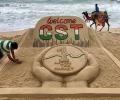
Six years after the rollout of the biggest indirect tax reform in India, Goods and Services Tax (GST) revenue of Rs 1.5 lakh crore every month has become a new normal and tax officers are focusing on dealing with fraudsters who are adopting newer modus operandi to game the system, causing loss to the exchequer. To apprehend black sheep, who operate as syndicates and create fake entities on the basis of forged documents to claim input tax credit (ITC), tax officers have started using data analytics, artifical intelligence and machine learning aiming to curb evasion, which was over Rs 3 lakh crore since inception of GST. It was over Rs 1 lakh crore in 2022-23. Thinktank Global Trade Research Initiative (GTRI) said the most critical pending GST reform is upgradation of GST Network to prevent fake supplies and fraudulent claims of Input Tax Credit (ITC).

'There are unscrupulous traders who create fake invoices by showing bogus e-way bills, movement of goods.' 'Since the entities registered across different states, and kept on changing their numbers, tracing them was difficult.'
Expanding investigation into allegedly wrongful claims of input tax credit by insurance companies, the tax authorities are probing a section of automobile dealers who have supposedly generated fake invoices without providing any service, which is a punishable offence under goods and services tax (GST) law. The authorities are learnt to have questioned the car dealers to explain the services they provided general insurance companies. The investigators suspect car dealers pitched for insurance schemes that give them commissions in excess of those insurance regulations permit.
A government report revealed that fake companies floated with fake addresses, issued fake GST invoices and generated fake e-way bills, with fake vehicle registration details without supplying any goods causing huge loss to the exchequer.
GST authorities have detected GST fraud of Rs 55,575 crore over the last two years and arrested over 700 persons for causing loss to the exchequer, an official said on Thursday. Over 22,300 fake GST identification numbers (GSTIN) were detected by the officers of the Directorate General of GST Intelligence (DGGI). The government on November 9, 2020, launched a nationwide special drive against unscrupulous entities for availing and passing on Input Tax Credit (ITC) fraudulently by issuing fake/bogus invoices, thereby evading Goods and Services Tax (GST).

Tax evaders, BEWARE! The Income Tax department is using AI data analytics to bust fake deductions, flag HRA fraud, and trace digital footprints.
Businesses with monthly turnover of over Rs 50 lakh will have to mandatorily pay at least 1 per cent of their GST liability in cash, the finance ministry said as it moved to curb evasion by fake invoicing. The Central Board of Indirect Taxes and Customs (CBIC) has introduced Rule 86B in Goods and Services Tax (GST) rules which restricts use of input tax credit (ITC) for discharging GST liability to 99 per cent. "... The registered person shall not use the amount available in electronic credit ledger to discharge his liability towards output tax in excess of 99 per cent of tax liability, in cases where the value of taxable supply ... in a month exceeds Rs 50 lakh," the CBIC said.
No longer a discretion of the tax administrator, the audit of returns filed by taxpayers is now based on a selection by algorithms, notes Tarun Bajaj.

GST Council extends anti-profiteering authority's tenure, sends rate cut on EVs to fitment panel and also extended the date for filing annual returns under the GST by two months to August 30.
Over 100,000 small and medium-sized businesses are non-compliant with e-invoicing norms under the goods and services tax (GST) regime, a mandatory requirement for businesses with an annual turnover of over Rs 5 crore. E-invoicing provides real-time access to invoices that are prepared by the supplier on the purchase of goods, allowing faster accessibility to input tax credit, thereby limiting the manipulation of fake credit as it has to be generated before the transaction. "The default has been reported mainly in businesses with a turnover between Rs 5 crore and Rs 20 crore," a senior official informed
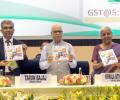
'We revolutionised the system in a manner so that the chances of leakage will be much lower than it was in the beginning.'
India's Goods and Services Tax (GST) collection surged to Rs 1.30 lakh crore in October, the second highest since its implementation in July 2017, indicating economic recovery from the COVID-19 pandemic and impact of festive demand, a finance ministry statement said on Monday. The highest GST collection of Rs 1.41 lakh crore was recorded in April 2021. This is the fourth time in a row when the GST collection was upwards of Rs 1 lakh crore. The collection from GST was Rs 1.17 lakh crore in September, 2021.

The Economic Offences Wing of the Delhi Police has filed an FIR against former BharatPe co-founder Ashneer Grover, his wife Madhuri Jain Grover and family members Deepak Gupta, Suresh Jain and Shwetank Jain for an alleged Rs 81 crore fraud after a complaint by the fintech unicorn. The FIR, a copy of which has been seen by PTI, was filed under eight sections of the Indian Penal Code, including 406 that deals with criminal breach of trust, 420 (cheating and dishonesty), 467 and 468 (forgery). BharatPe in the complaint alleged that Grover and his family caused damages of about Rs 81.3 crore through illegitimate payments to bogus human resource consultants, inflated and undue payments through passthrough vendors connected to the accused, sham transactions in input tax credit and payment of penalty to GST authorities, illegal payment to travel agencies, forged invoices by Madhuri Jain and destruction of evidence.
 © 2026 Rediff.com - Advertise with us - Disclaimer - Privacy Policy - Sitemap - Feedback - About us - Terms of use - Grievances